

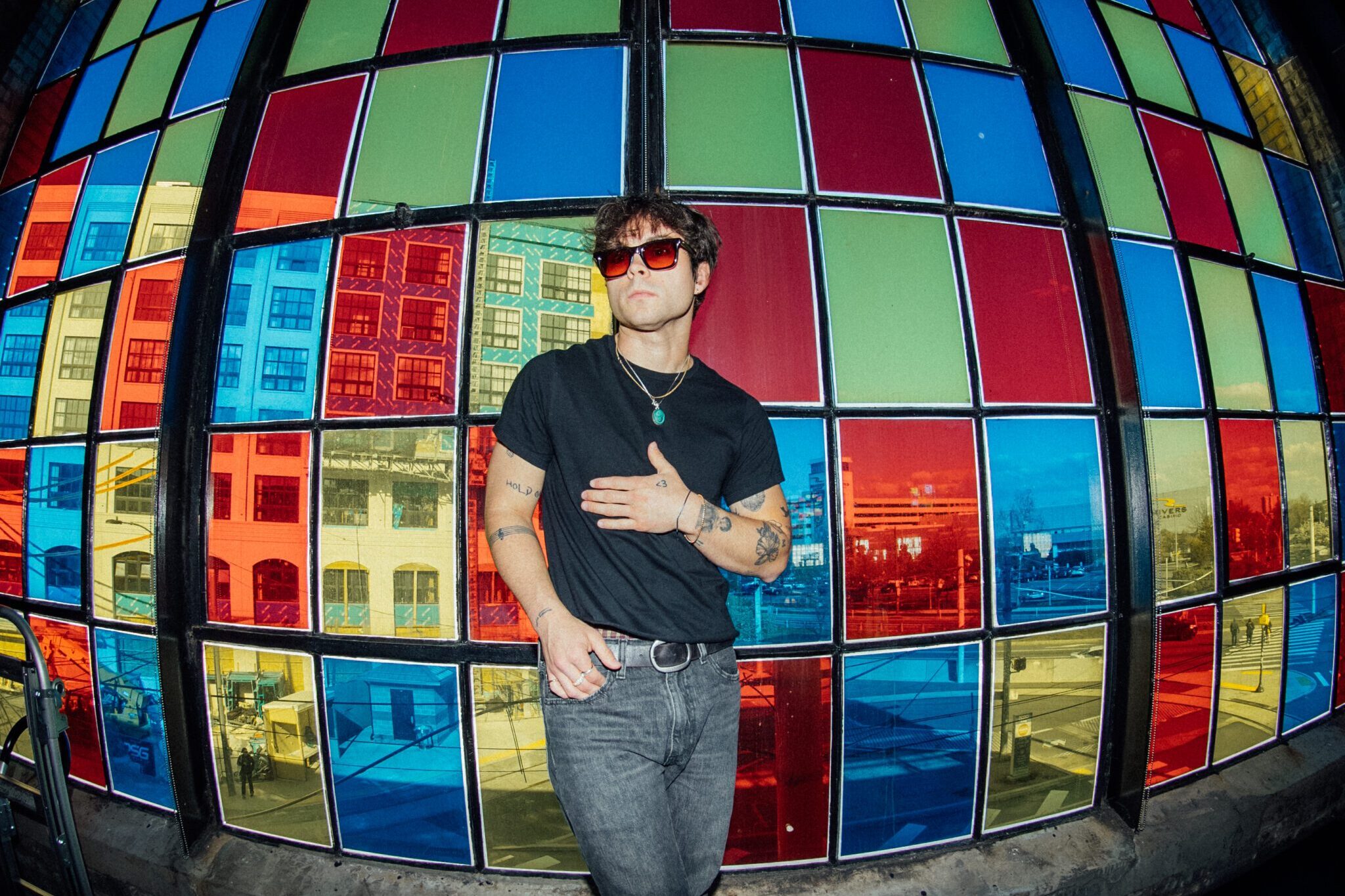
Recently, we got the opportunity to interview an amazing talent, music artist kylekelly. Kyle just released a new EP, titled a melancholic romcom. He’s also been touring with Daniel Seavey, and they’re about to all head out for the European leg of the tour. Check out our coverage of their Nashville show down below after reading through the wonderful interview conducted by our own Kenzie Lucas.
Summary
Here’s a summary of the interview between Stereofade’s Kenzie Lucas (KL) and artist kylekelly (KK):
EP Release & Touring:
kylekelly reflects on the release of his debut EP a melancholic romcom, describing it as “weird but good,” especially since it’s happening while he’s on tour. Seeing fans already know the lyrics, sometimes even before songs officially drop, is surreal and deeply gratifying for him.
Single Spotlight – “it always ends the same”:
The production came before the lyrics, and Kyle aimed to create a “cry-in-the-club” song—something emotional but danceable. He emphasizes the importance of aligning sonic tone with lyrical vulnerability.
EP Concept & 90s Rom-Com Influence:
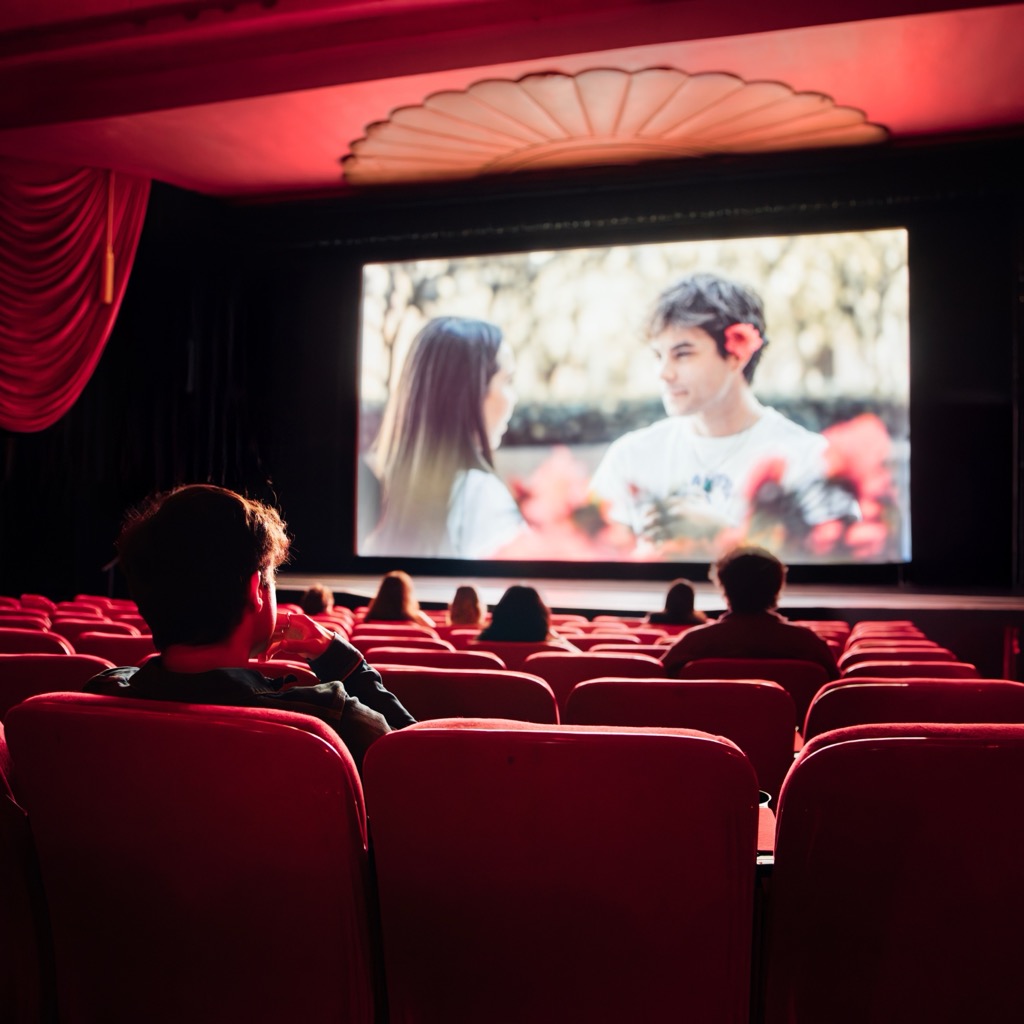
The EP’s concept emerged organically while Kyle was binge-watching rom-coms on Paramount+ during the writing cycle. The nostalgic and emotional tone mirrored the music he was making, creating a Stranger Things-meets-rom-com vibe. Each song ended up representing specific plot points, and the process felt serendipitous.
Songwriting Stories:
- “my little heart <3” was written quickly and emotionally about a real crush—who later saw the song performed live.
- “Priscilla” almost didn’t make the EP until kylekelly’s manager found it on a hard drive.
- One unnamed song was drastically slowed down in production, which changed its emotional impact.
Musical Influences:
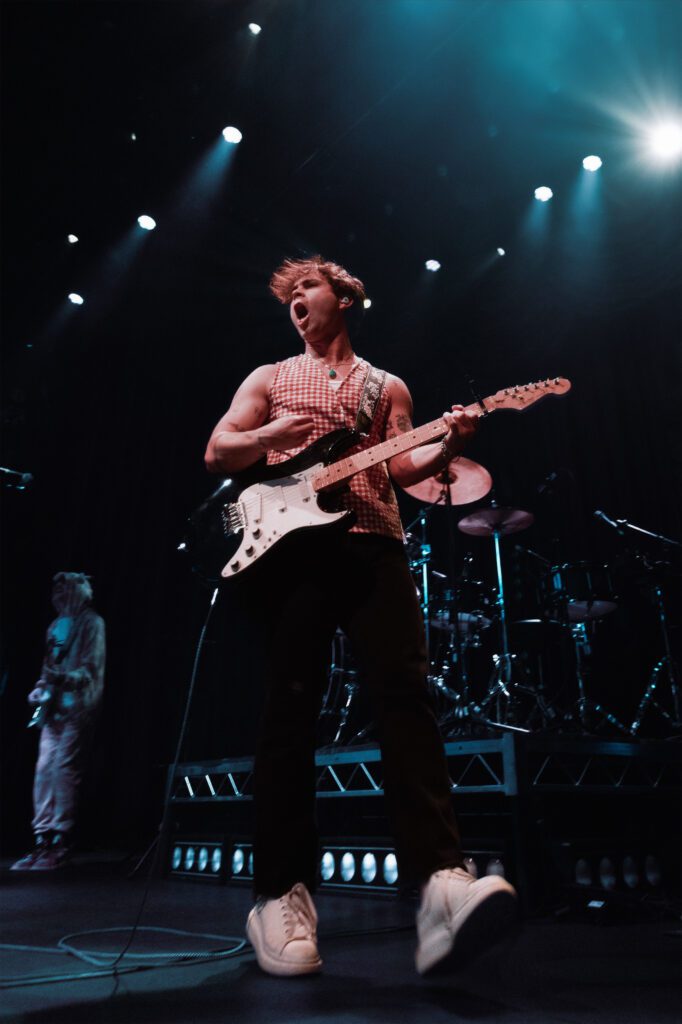
kylekelly cites 5 Seconds of Summer as a major influence, both musically and vocally (he even shares their vocal coach). Other lyrical inspirations include Shawn Mendes, Dominic Fike, ROLE MODEL, and The 1975, who balance vulnerability with humor and self-awareness.
Vulnerability in Songwriting:
Kyle uses music as a vehicle to express feelings he struggles to articulate in real life, especially related to loneliness and anxious-avoidant attachment. Music allows him to open up and process emotions without having to explain them.
Early Performance Roots:
He started performing at 17 in NYC, mainly through open mics and casual shows for friends, to test whether his musical ideas resonated with others.
Touring with Daniel Seavey:
Being on tour with Seavey was full-circle for him, as he was a fan first. He learned the value of fostering a supportive team environment and wants to carry that forward when headlining.
kylekelly embraces being perceived as a “diva” in a fun, self-aware way. He plays into it during live shows (especially in Nashville) while building a sense of shared community with fans. He wants listeners to feel like they’re getting both a personal and relatable experience from the EP, like rewatching a nostalgic movie with a modern twist.
He hints that “it always ends the same” is likely his favorite track on the EP. Check out the full EP below and be sure to read the full transcript as well.
Full Interview Transcript
KL: First of all, congrats on your debut EP, a melancholic romcom
KK: Thank you!
How does it feel to finally get this out to the world?
KK: Weird. It feels weird. I mean, it feels really good… it feels really good that it’s coming while I’m on tour ‘cause I get to see people learn all of the words in real time. So that’s— that’s really cool.
Like, we had a song come out two or three weeks ago. I want to say that by the time it had been out for a couple of days, people already knew the words— which was really cool. People— like, even before I put the chorus up on TikTok or whatever… people knew the chorus before the song had even come out. That was cool.
So yeah, I think I’m just looking forward to that— seeing people hear it in real time and getting tagged in all of the TikTok’s and everything.
KL: That has to feel surreal.
KK: Oh, it’s weird— it’s really weird.
Let’s talk about the new single, it always ends the same. The production has such a cool sonic build— from glitchy beats to this sort of funky, guitar-driven sound. What’s the story behind that?
KK: We had the production— we had like a structure already before the song had gotten written. Because I’m not amazing with production, we wound up just taking the chords and making a piano version. I wrote the song over that, and then we put it back onto the track.
I kind of wanted— I don’t know— I kind of wanted something that like… a lot of my songs, I want the lyrics and melody to match the vibe of the production. So I wanted something that hit really hard, while still being moody. That’s kind of how we got that— something that emphasized the story in a way that words can’t.
I wanted a cry-in-the-club song! I wanted people to dance and cry.
KL: And you did just that. I was just listening to it on the way here.
KK: Thank you! There was one TikTok I saw the other day where a girl was like— it was just a video of her and her jaw dropped— and it was like, “I just read the lyrics to this song.” And the caption was like, “There’s a difference between listening to kylekelly and LISTENING to kylekelly.” Which was very reassuring, for sure.
KL: Oh I know! You’re bopping around to it and then you’re like, “Oh! Wait..! No.”
To go off of that— there’s a messy love triangle theme that feels very rom-com gone wrong or a coming-of-age movie in musical form. How did those classic ‘90s movies play into the EP concept?
KK: It really happened at the same time. The story behind it was— while we were in the writing cycle, I got a free Paramount+ subscription for a month. There were so many rom-com movies I had seen— or hadn’t seen in a long time. So on my flights, in hotels, and all that, I started just watching all of them and rewatching the ones I had already seen.
I think it kind of just… catch-22’d— where I was watching them and writing the album at the same time. What I was writing was influencing the way I was watching them, and what I was watching was influencing what I was writing.
Then I had a moment when we went to record it, where I was like, “I want it to sound like if Stranger Things was a rom-com.” And I told a couple of my friends that, and they were like, “That’s you… that’s your vibe.”
So it wound up just working out that as we went along— the things I was writing about, the way we were recording, and the mood board that my photographer and I had put together— it all started to really feel like me. And then… it all just came together at the same time. It was very serendipitous.
It was also really cool to like… as we were picking the ones— at the end of the writing cycle, we had about 50 songs— and when we were picking 13, the ones we picked were like, “Oh, that’s a plot point in this movie…”
It actually worked out that the last song we wrote was ‘my little heart <3’— and we wrote it because I didn’t have a song about having a crush. So my friends came in and I was like, “I need to write a song about having a crush.”
I wrote it in like an hour. I hadn’t written about the girl that it’s about, ever. So the moment I decided to write about it, it just kind of fell out of me. And it helps that I wasn’t subtle about… what it’s about.
There was a TikTok the other day… one girl was lip-syncing my little heart <3, and then said, “Kyle do you understand how hard you ate with this song?” and I commented, “Yes, actually, because I played it in front of her the other day.” She was at the D.C. show.
KL: Was that nerve-wracking?
KK: It was definitely weird… you want to do like a better job. But I wasn’t nervous, particularly. It was definitely a little weird though.
There was a moment where a fan behind her was waving at me, and I waved to the fan during my little heart <3 and then I was like— right… I’m gonna walk over here now.
KL: Did you expect that to ever happen, or think of that scenario when writing?
KK: You definitely have the thought of, “I wonder what will happen when they hear it.” I try not to let that bother me too much… because if you get in your head about it, you start to doubt the things you’re saying or curate what you’re saying to their experience of hearing it.
I try to avoid that as much as possible. You’re not writing music for the people you went to high school with— you’re writing music for you.
Were there any songs that almost didn’t make the EP or ones that changed drastically from a demo?
KK: Priscilla almost didn’t make it. That was a deep cut that was shelved. My friend and I watched a movie and then just wrote a song and were like, “Oh that was fun. Let’s put it on a hard drive and never touch it.” Then my manager randomly found it and was like, “That was so good, we need to record it.”
I think there’s only one song… we wrote it in London… it came out very different than the way we wrote it. We wrote it very fast, and when we went to record it, we slowed it down by 20 BPM— so, very drastic.
KL: For you, does that change the meaning or perception of the song?
KK: I don’t know if it changes the meaning, but it definitely changes the way it’s received.
Like, the one I was talking about that got so drastically changed— I think if it were faster, it would’ve felt less vulnerable than it does. OMG is a good example of this. When I made the acoustic version of it, I dropped it by like 25 BPM— and then you get to hear just how raw the lyrics are.
Whereas in the faster, like 5 Seconds of Summer version of it, it’s just fun to head-bang to or something— you’re not really listening. So, I think it’s more so that— things hit harder when they’re so drastically different.
You mentioned 5 Seconds of Summer. Were they an inspiration on this EP at all?
KK: Huge. I am a day-one fan. So that has actually worked out on tour— people have found that out.
There was one girl in Atlanta that asked me to play Lie to Me 18 times… she’d comment on every post like, “Day 18 of me asking…”
They were really influential on the EP— and they’ve become very influential on my identity, for lack of a better term. Like, I think if I was on a different tour than Daniel’s, I wouldn’t be able to lean into my boy band influences as much. That’s been really cool.
5 Seconds of Summer has always been a huge influence on me across all their albums. I definitely gravitate toward specific sounds of theirs depending on what I’m writing.
Their vocal coach is my vocal coach— and I definitely learned how to sing from them. It’s nice to hear how easily my influences show.

You’ve been really open about your personal experiences with mental health and anxious habits. How does that kind of vulnerability translate into your songwriting?
KK: I have a really hard time asking for help and feeling comfortable talking about these things. What I’ve noticed is a lot of the concepts I write about just stem from feeling lonely and not knowing how to deal with that—because I also don’t want to ask for validation or help or anything.
I’ve also realized, listening back, that unfortunately I’m the worst of both worlds. I have an anxious-avoidant attachment style, and I think my music is the only way my anxious attachment gets voiced. Often, both are voiced.
But because it’s so hard for me to ask for help or open up, I’ll feel avoidant in real life—but then in my music, I say the things I wouldn’t normally say out loud. It’s definitely given me an outlet—like, okay, now that I’ve put these feelings into a song, I can talk about them. Or if I don’t want to talk about it, I can just be like, “This is what I’m feeling. Listen to this and don’t ask me questions.”
And it’s cool. Priscilla isn’t about me, but now I get to see parts of myself in it, which is really cool.
You’re a self-taught multi-instrumentalist, and you started in New York City at 17. What made you want to start performing live so young?
KK: I think I played one NYU open mic—maybe two… something like that. A lot of it was just me playing for friends. It was me and an acoustic guitar—nothing like what we’re doing now. But I think it was cool to stretch my legs and just get some sort of proof of concept, like, “Oh, this thing I’ve had imagined in my head for so long—I can do it. And people also like it.”
You’ve got a really specific lyrical style—funny, self-aware, but emotional. Who are some artists who influenced that voice?
KK: I try to strike a balance between being really literal and really abstract. I think a lot of 5 Seconds of Summer stuff can be very abstract, and someone like Shawn Mendes is very literal. I try to find the line.
The self-awareness definitely comes from influences like ROLE MODEL, Dominic Fike, and The 1975—people with that lyrical style where you can be open and vulnerable, but kind of mitigate that with jokes.
I don’t like being on the nose. I would hate to write a song where the hook is “I am a homewrecker and I feel guilty.” I would hate that.
I try to just touch on a topic without necessarily saying, “This is what it’s about,” and instead say it in a way where you can perceive my thoughts without me spelling them out. Show, don’t tell—that’s what I try to do.
You were recently on tour with Daniel Seavey. What was that experience like, and what did you take away from being on the road?
KK: I mean, it’s been incredibly surreal because I’ve been a fan of his for years. So to not even just interact with him, but to share a stage with him and then get to watch his show every night—it’s so cool to be such a huge fan of his and now also a friend. That’s been incredibly surreal. My life came full circle with that.
I think the biggest thing I’ve learned from him and his team is just… it’s really necessary to create an environment where everyone feels supported. His team has been nothing but welcoming and kind. We had a ton of technical issues across the tour, and his team—just wanting to help or being supportive—would come look at our entire rig for hours.
So I think the biggest thing I’ve learned is: when I headline, I want to create an environment where the people on my team and the openers feel comfortable too.
It’s been really cool—almost like one big frat, for lack of a better term. We all hang out and… you know. That’s been really cool, to just have that family environment. And I didn’t realize that wasn’t typical.
When you imagine someone listening to this EP alone in their room or in their car, what do you want that moment to feel like for them on that first listen?
KK: My best friend actually said this one quote that I’ll never forget. He said listening to my EP feels like watching your favorite childhood movie for the first time again—getting a modern but nostalgic experience. I hope everyone can share that, the way he and my friends have.
A couple of my childhood friends came to visit me in L.A. for my birthday this past year, and I played them the album. One of them started crying and was just like, “It feels like you…” which I’ve never had before.
So I hope people can experience a very personal connection with it. It reads like I do—as much as they can relate to it, they also get a piece of me. I try to build a sense of friendship with the fans I meet across the tour. I hope they can have that without having me in person as well.
KL: You’re doing a good job on that—being very transparent with everything.
KK: And a little sassy, apparently. Never beating the diva allegations, that’s for sure.
KL: How do you feel about the diva trend?
KK: I love it. It’s so real. Like—I am. I’m not going to deny it. I think it’s really fun for me to play into it without people taking it personally. If I didn’t have that reaction to it, I’d have to be shielding a part of myself. So I love it.
KL: And Nashville definitely played into that.
KK: That was the most diva show. I think the costumes brought a different version of us out—we could really play into it. That was by far my favorite show, too. I really played into the diva thing, especially with the She’s Kinda Hot little thing I did. It was an Easter egg… you know.
I loved being able to do that—watching fans scream and be like, “Ah! You thought.” People were so mad. One girl commented like, “Teasing us with that riff was diabolical,” or something… which was very fulfilling, ‘cause I like that I get to mess with people a little bit. I just want to have fun. That was the whole point of the show—we get on for 20 minutes, have a party, and leave.
I can sit there and be like, “Why aren’t you jumping?” and people know I’m in on the joke. Very early on, I established that I was one of the girlies. It’s really cool to have this fanbase in particular, because I am one of you. I get to be in on the experience because I was there—I was there watching 5 Seconds of Summer and The Driver Era and freaking out. So like, I’m one of you. We got this.
Do you have a favorite track off the EP—or one that means the most to you?
KK: It’s hard to not say “it always ends the same,” ‘cause it’s my favorite. But I would say, of the ones on the EP, OMG means the most to me. Before bringing it to Brandon, I had pretty much produced, written, organized, and arranged the entire thing by myself—and then I brought it to him and we just tweaked it. So that one means a lot to me.
my little heart<3 has also become really important to me because of how much people love it. I just get to have fun and jump. Playing it while she was in D.C. was fulfilling. I think it’s had a new life for me—that one in particular.
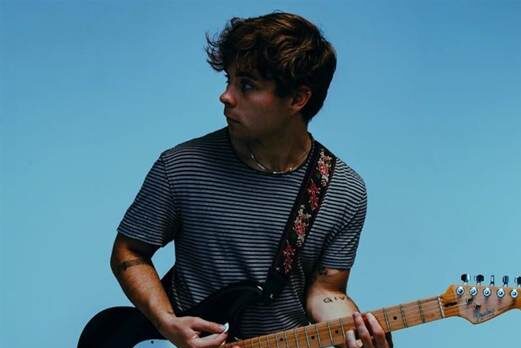
The famous last question: What’s next? Any touring or new projects in the works?
KK: The hope is to have a direct support slot in the fall—or summer, if we can. I really want to play festivals. That’s a dream of mine.
We have a second EP. The single from the second EP will come out after Australia. Then… road to opening for 5 Seconds of Summer. I can’t deny that’s not the goal, right?
KL: Yeah! And it will happen!
KK: Mike, Noah, and I talk about it all the time… that is the dream right now.
I know people are asking for a headline tour… and I love the enthusiasm. I’d like to play two or three headlined shows—like maybe New York, L.A., Chicago. So we’ll see.
It would be nice to play a ballad for once—not have it be a party the whole time. As much as I love the party, I’d like to play one song that’s… it’s hard to curate a setlist while also keeping the energy consistent.
Thank you to Daniel for allowing me to adopt your fans—it’s been very nice. It’s been really cool, especially to have his support too.
He’s been so like, “Yes! Take him!”
I love him so dearly—so kind.
Here’s a link to our coverage of his Nashville show with Daniel Seavey: https://stereofade.com/daniel-seavey-and-kylekelly-shine-at-the-brooklyn-bowl-in-nashville/
Stay tuned to Stereofade for more interviews, reviews, and more from artists all around the world.
